Flat People Women 7: Designer’s Real‑World Test
First Look: What Flat People Women 7 Brings to the Table
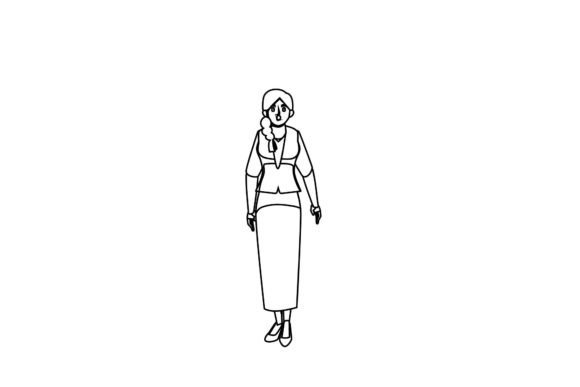
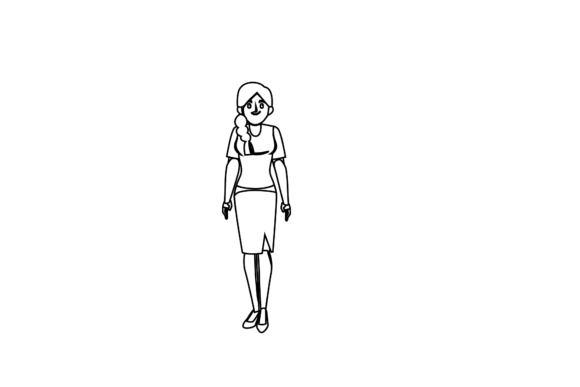
When Flat People Women 7 landed on my screen, I immediately saw a design that feels like it was made for quiet, story‑driven embroidery projects. The illustration style is minimal and expressive at the same time — a line‑based figure with a gentle, everyday mood. It reminds me of the kind of artwork you’d find in a thoughtful coloring pages collection, but with enough personality to stand on its own as a finished stitched piece. Because it’s a graphic file rather than a ready‑to‑stitch embroidery file, my first thought went straight to how this would translate into thread on fabric, not just how it looks on a screen.
The described canvas size — 1920 px by 1280 px — means the artwork has enough resolution to work with across multiple scales. For anyone who digitizes their own designs, having a crisp, large source file is a practical advantage. The vector formats (AI, EPS, SVG) give clean lines, while the JPG and PNG versions let you quickly drop the design into a mockup or a printable mockup before you even load a hoop. Right away, Flat People Women 7 presents itself as a flexible design asset rather than a locked‑in pattern.
Translating Flat People Women 7 into Real Embroidery
Here’s where the designer’s eye matters. A flat people illustration like this one is built from contour lines and open shapes — not dense fills. When I think about stitching Flat People Women 7, I picture a running stitch for the main outlines, maybe a satin stitch for a few accent areas like sleeves or hair, and very little fill stitch unless you intentionally add it. The lightweight nature of the design is its strength. It won’t demand a heavy stitch count, which means it can sit comfortably on lightweight fabrics without puckering.
I tested a quick mental digitizing pass: the profile of the woman, the simple dress shape, the angled head. All of these read well even when reduced to a single‑color outline. If you convert Flat People Women 7 into a machine embroidery design, you’ll want to keep the stitch density low in tight corners — especially around the facial profile and hands. The SVG file is your best friend here; you can scale it without losing definition, then manually adjust anchor points before sending it to your digitizing software.
The Real‑Case Moment: A Custom Tote That Told a Story
Let me ground this in a real scenario. A client asked for a personalized gift for her sister — a natural linen tote bag with a simple, modern woman illustration that felt like a self‑portrait. I pulled up Flat People Women 7 and immediately saw the fit. The figure’s relaxed posture and clean lines wouldn’t fight the fabric texture. I digitized the design using a single‑color charcoal thread, with a light running stitch outline and a subtle satin stitch for the hair mass. I hooped the tote with a medium‑weight cutaway stabilizer and ran a test on a similar scrap of linen.
The result was exactly what I hoped: the stitched version of Flat People Women 7 looked deliberate, handmade, and emotionally warm. The client’s sister later told me it felt like “a drawing that came to life in thread.” That’s the kind of reaction that turns a one‑time buyer into a repeat customer. For a craft business owner, this design can become a signature look — understated, human, and easy to pair with short text or a name.
Best Project Matches for This Design
After that tote bag test, I started imagining Flat People Women 7 on a whole range of handmade product ideas. Here’s where I’d confidently use it:
- Tote bag design – natural cotton, canvas, or even a waxed canvas finish.
- Sweatshirt embroidery – small placement on the left chest or a larger version on the back.
- Baby embroidery – on a soft cotton onesie or a nursery pillow cover, using gentle pastel threads.
- Embroidered patch – digitize with a merrowed edge and sell it as a standalone iron‑on patch.
- Holiday embroidery – pair the figure with a seasonal wreath or a small gift‑box icon for a subtle festive project.
- Kitchen towel – a single‑color version on a flour sack towel feels effortlessly modern.
- Custom apparel – on a denim jacket, cap, or linen apron for a boutique‑style look.
In each case, the flat, uncluttered style of Flat People Women 7 keeps the product from feeling over‑designed. It leaves room for the customer’s imagination, which is a huge plus for Etsy seller listings and small shop product photography.
Where to Use Caution (and Why)
No design works everywhere, and an honest review means pointing out the limits. Flat People Women 7 has fine, open details around the face and hands. If you shrink it too much — say, under 2.5 inches wide — those tiny curves may lose clarity, especially on a textured fabric like terry cloth or fleece. I’d avoid very small hoop sizes unless you’re willing to simplify the line art by removing the smallest features.
Dark fabrics are another consideration. On a black sweatshirt, the outline still reads well in a light thread, but the subtlety can get lost. Always test on a swatch first. Stretchy fabrics like ribbed knits need a good stabilizer and possibly a basting stitch to keep the design from distorting. And if you plan to use Flat People Women 7 as an applique design, you’ll need to create a clean placement and tack‑down stitch; the outline alone won’t hold fabric pieces in place without some modification.
How Flat People Women 7 Strengthens a Handmade Product Line
From a branding perspective, Flat People Women 7 adds a recognizable human touch. When customers see a consistent, empathetic figure style across your embroidery project lineup, they start to connect it with your shop’s identity. I’ve seen this work wonders for commercial embroidery sellers who build a series around similar flat people motifs. The design also lends itself beautifully to personalized gift sets — imagine a tote, a matching pouch, and a small pillow cover all featuring the same woman figure with a few custom color variations.
Trust plays a big role here. A clean, well‑stitched version of Flat People Women 7 signals that you care about the finished product look. It doesn’t clog the fabric with excessive stitches, it doesn’t warp after washing, and it photographs beautifully against textured backgrounds. For a digital embroidery file seller, this design is also a strong candidate for a printable mockup — you can use the PNG version to create realistic previews that convert browsers into buyers.
Thread, Fabric, and Color Choices That Make a Difference
I always recommend testing Flat People Women 7 in a few thread color scenarios before committing to a final product. A single color is the safest bet: dark charcoal, navy, soft terracotta, or even a muted olive green. If you want to add a second color, try it only in the hair or a small accessory shape — too many colors break the quiet, unified feel.
As for fabric texture, smooth cotton or linen gives the crispest definition. On a nubby tweed, the design still works but gains a slightly rustic, hand‑drawn quality. That can be a selling point or a flaw, depending on your aesthetic. Check the design’s behavior in a black‑and‑white mockup as well; sometimes a design that looks balanced in full color feels unbalanced in monochrome, and Flat People Women 7 needs that silhouette check.
Practical Designer Notes Before You Stitch
Before you load Flat People Women 7 into your embroidery machine, here are the steps I’d take to avoid surprises:
- Test on scrap fabric – always. Match the fabric type and weight to your final product.
- Check thread color contrast – hold the thread spool against the fabric under natural light.
- Review stitch density – if you’re digitizing from the SVG, keep the density low in tight curves.
- Confirm your hoop size – the 1920 px width gives you room to scale, but downscaling too much risks losing detail.
- Inspect small details – the face profile and fingers need special attention during digitizing.
- Use proper stabilizer – a cutaway for garments, a tear‑away for flat items like towels, and a water‑soluble topper for textured fabrics.
- Test in black and white – a quick printout or grayscale screen preview helps spot contrast issues.
- Compare light and dark fabric backgrounds – the design may need a slight outline thickness adjustment for reverse‑color applications.
- Confirm licensing – since this is a graphic file intended for multiple uses, make sure the terms allow you to create and sell embroidery file derivatives or finished physical products.
One last note: if you’re a craft business owner who sells both digital and physical items, Flat People Women 7 can serve double duty. Use the AI or EPS version to create design assets for your shop’s branding, then digitize the SVG for your embroidery project line. That kind of synergy makes your workflow smoother and your brand look intentional.