Wilde Beest Coloring Page for Kids Crafts
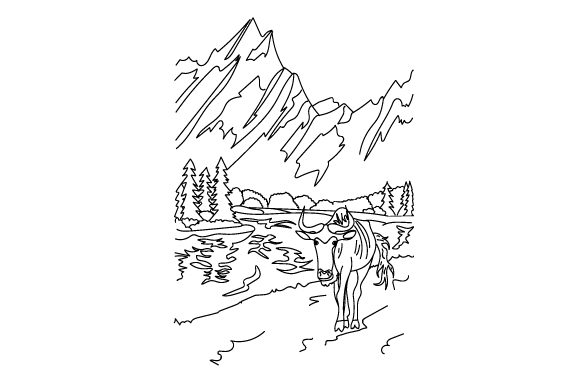
I opened the Wilde Beest Coloring Page file right as I was planning a new batch of kids’ craft kits for an upcoming weekend market. My small handmade business relies on assets that feel playful, print cleanly, and give parents that instant “my child will love this” reaction. This design hit all of those notes. The wildebeest illustration has a friendly, slightly rugged charm—a perfect mix of safari adventure and approachable cartoon style. It’s not overly cutesy, so it can work for both little boys and girls, and it carries a nice rustic, exploratory mood that fits a “wild animals” theme beautifully.
As a coloring page, its lines are bold and largely unbroken, which is exactly what I look for when I design printable products for kids. The shapes are forgiving enough for young hands to color inside, yet detailed enough to keep an older child engaged. For crafters, that same boldness translates into strong cut lines and crisp print results.
What You Actually Get in the File Package
After downloading, I immediately checked the four formats. The SVG file opened cleanly in my design software, with no stray nodes or weird compound paths. The transparent PNG was high-contrast black on a clear background, ready to drop into a print layout or placement mockup. The EPS preserved all the path data, and the DXF was a welcome bonus for anyone using older cutting machines or software that prefers that format. Having all four formats in one purchase makes this a flexible graphic design asset for a wide range of workflows.
- SVG File – ideal for Cricut projects, Silhouette projects, and scalable cutting.
- Transparent PNG – perfect for printable designs, sublimation design, and quick mockups.
- EPS – great for advanced editing and maintaining vector quality.
- DXF – useful for older craft software and some laser cutting setups.
First Impressions from a Designer’s Eye
When I test a new digital product for my shop, I always ask: does it feel like something people would actually buy on a finished item? The Wilde Beest Coloring Page absolutely does. The character has a gentle, curious expression, and the mane and tail have just enough movement to keep the design lively. It’s not overly detailed, which is a huge plus for making stickers, iron-on decals, and printable coloring pages. The silhouette will read well even from a distance, making it a strong candidate for tote bags, t-shirts, and party favor tags.
I placed the PNG on a powder-blue kids’ shirt mockup and immediately saw a winning product. The design pops on light and pastel backgrounds, and the black outline holds its own without needing an extra underbase. For sublimation designs, the pure black vector line is a dream—no hazy edges, no faint gray breaks.
How I’d Use This in a Real Handmade Product Lineup
Imagine you’re putting together a “Safari Adventure” collection for your Etsy shop or a local craft fair. The Wilde Beest Coloring Page can anchor a whole product family without feeling repetitive. I’d personally pair it with other animal clipart from the same style family to create a bundle, but even as a standalone piece, it fills a niche many sellers overlook—wildebeests are less common than lions or elephants, so the design feels fresh and memorable.
Here are the crafting and handmade business ideas I immediately mapped out:
- Printable coloring pages – as a single page or part of a safari animal design bundle.
- Sticker design – print-then-cut on matte sticker paper for kids’ water bottles, laptops, and party loot bags.
- T-shirt design – heat transfer vinyl or sublimation for birthday shirts, zoo trip outfits, or animal-themed classroom days.
- Mug design – a cute wildebeest mug with the child’s name underneath, using a simple script font.
- Tumbler wrap – a full-color sublimation wrap with a jungle background and the wildebeest line art in the foreground.
- Tote bags – a bold single-color print for a reusable bag that kids can take to the library or nature camp.
- Greeting cards and gift tags – blank inside, with the wildebeest on the front, perfect for birthday parties or thank-you notes.
- Party decorations – cupcake toppers, banner flags, and favor bag stickers.
- Planner stickers – scaled down for a jungle-themed weekly spread.
- Scrapbooking accents – as a whimsical die-cut element.
Where This Design Really Shines
In my experience, the sweet spot for a graphic like this is anything that benefits from a clean, standalone illustration. Large-area prints are its best friend. I’d use it for full-size coloring sheets, 8x10 printable wall art, and the front center of a toddler’s tee. The bold strokes guarantee that a one-color vinyl cut looks intentional and professional. Even a beginner Cricut user can weed this without frustration.
It also shines in print-on-demand and creative marketplace listings. The transparent PNG makes it effortless to drop onto product mockups for a quick visual listing. I’ve already prepped a mockup of a wildebeest tote bag and a matching kids’ apron, and both look like they belong in a boutique shop.
For handmade sellers who offer personalized items, this design pairs beautifully with a name, a short message, or a date. I tested it with a playful sans serif font and a handwritten script, and both looked balanced. The wildebeest’s stance leaves a natural pocket for text on the left or right, so you don’t have to fight the composition.
Where to Be Extra Careful
No design asset is perfect for every single application, and being honest about the limits saves time and wasted material. The Wilde Beest Coloring Page has some thin areas I’d watch closely. The tail tuft and the wispy mane have a few delicate lines that might become fragile if you shrink the design too aggressively.
From my own testing, I’d caution against:
- Very small sticker sizes – under 1.5 inches, the mane details can start to fill in and look muddled.
- Extremely intricate layered vinyl projects – this is a single-color line illustration, and breaking it into multiple layers would be unnecessarily complex. Stick to a one-color cut or a direct print.
- Low-contrast color combinations – if you print the line art in pale gray on a light background, the impact gets lost. Black or dark brown on a bright or pastel surface works best.
- Unweeded tiny inner cuts – the eye and nostril details are small but manageable. Always do a test cut on scrap vinyl before committing to a full run.
Practical Crafting Workflow Tips
I’ve been burned by digital files before, so I always run a few checks before I turn a design into a product for customer orders. Here’s what I recommend for the Wilde Beest Coloring Page:
- Test the SVG cut lines immediately. Open the file in your cutting software, size it to a 4-inch test piece, and cut it on plain cardstock or cheap vinyl. Look for any disconnected paths or erratic movements. Mine came through perfectly.
- Inspect the PNG transparency. Zoom in to 300% and check the edges around the horns and tail. You want a crisp boundary, not a fuzzy halo. The provided PNG is clean even at high magnification.
- Check resolution for sublimation. If you’re planning to sublimate a large tumbler or a full-size shirt, size the PNG to your final dimensions and make sure the resolution stays above 200 DPI. The vector files bypass this worry entirely, but for PNG-only workflows, confirm it’s sharp enough.
- Print a color test before production. Even if you’re using black ink, the line weight can vary between printers. Print a single sheet, adjust your printer settings if needed, and then produce the full batch.
- Place it on real product mockups. Don’t just trust the screen. Drop the design onto a photo of a blank mug, a t-shirt, or a sticker sheet. The wildebeest’s proportions hold up beautifully on most products.
- Simplify the layout if needed. For a baby onesie, you might want to remove the very thin tail hairs and use the main body only. It’s easy to edit the vector file in a few clicks.
- Pair with the right font. I tested this with a chunky serif, a clean sans serif, and a playful handwritten font. All worked, but the handwritten style gave it a heartwarming, storybook feel that tested well with my customer preview group.
- Always confirm your commercial license. Before you sell a single finished product—whether it’s a mug, a sticker, or a printable coloring page—read the license terms. The asset description suggests commercial use is allowed, but I always double-check the exact permissions and keep a copy of the license for my records.
How It Fits a Small Business Branding Strategy
If you’re building a recognizable handmade brand, consistency matters. The Wilde Beest Coloring Page can become a recurring character in your seasonal collections. I’ve had success using a signature animal silhouettes as a small logo mark on packaging, thank-you cards, and even product tags. This wildebeest has that kind of potential—it’s distinctive but not overwhelming.
For craft fair displays, I’d print a giant version on a banner and surround it with the actual products. The black-and-white line art stands out against bright tablecloths, and it instantly tells shoppers that your booth is kid-friendly and full of handmade charm.
Final Thoughts from a Fellow Maker
I’ve tested plenty of coloring page designs over the years, and many look good on a screen but fall apart the moment you try to cut them or shrink them. The Wilde Beest Coloring Page is a genuine workhorse. It’s clean, versatile, and fits right into the Coloring Pages Kids category without feeling generic. The fact that it’s delivered in SVG, transparent PNG, EPS, and DXF means I can immediately use it for Cricut projects, Silhouette projects, sublimation designs, and printable products without any file conversion headache.
For a handmade business owner who wants to expand into children’s gifts, party supplies, or personalized craft items, this design asset is a solid investment. It’s not just a coloring page; it’s a launchpad for a whole product line. I’ve already added a wildebeest-themed sticker set and a matching birthday card to my shop, and the early response from my customers has been delightful. If you’re on the fence, do a test cut, print a sample, and you’ll see what I mean.